The Catholic Diocese of
Kitui exists to witness Christ through Evangelization to all and service to
people in need as a way of empowering them towards sustainability in the
process of bringing about the kingdom of God.
DIOCESAN VISION STATEMENT
To be an integrated,
empowered and self sustained Eucharist community reaching out to witness Christ
through evangelization to all and service to people in need in the process of
bringing about the kingdom of God.
GEOGRAPHY:
Catholic Diocese of Kitui
covers the four Administrative Districts of Kyuso, Mwingi, Kitui and Mutomo, an
approximated arid and semi arid area of 30,142 Km² in Eastern province, Kenya,
with a population of around 1.09 million people in the Diocese with over
240,000 baptized Catholics (*Source: Central Statistics ofthe State; Secretariat of State; (2005)
HISTORY:
The first Missionaries to
evangelize Kitui were Holy Ghost fathers from Kabaa (Machakos) in early 1930s. Also,
by the time the Holy Ghost Fathers were introducing Christianity in Kitui, the
Consolata Missionaries from Meru were evangelizing in the northern sides of
Kitui (Now Kimangau). The first Mission house was built in 1945 at Mutune.
Kitui Apostolic Prefecture
was curved from the Archdiocese of Nairobi in 1956 under care of St. Patrick’s
Kiltegan Missionaries, before becoming a Diocese in 1964, with His Lordship,
the late Most Rev. William Dunne as the first Bishop (R.I.P). Following his
retirement in 1996, the Most Rev. Bishop Boniface Lele (Now Archbishop) succeeded
him, until he was also appointed the new Archbishop of Archdiocese of Mombasa
in 2005. Rev. Fr. Paul Healy was then elected as the Diocesan Administrator,
pending the naming of new Bishop. He was the Diocesan Administrator till 2007 May,
when Rt. Rev. Bishop Martin Kivuva was appointed as the Apostolic
Administrator.
June 28th,
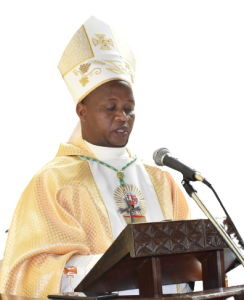
2008: His Lordship Rt. Rev. Bishop Anthony Muheria is appointed the
Third Bishop, catholic diocese of Kitui
The first Diocesan Priests
in the Diocese were Frs. Peter Muema Kyumbua and Boniface Lele (Now Archbishop
of Mombasa), who were ordained in 1974.The first nun to profess was Sr. Teresia
Muli (Assumption Sisters of Nairobi) from Boma.
By 1989, there were 16 Diocesan
priests; a number that grew to 30 in 1999.Currently there are 64 Diocesan
Priests, 5 Missionary priests ministering in the Diocese. Also, there are12 Congregations
of Religious Men and Women; with daughters of Jesus the Good Shepherd (DOJGS)
being diocesan.
THE CHURCH GROUPS
Inclusively are several
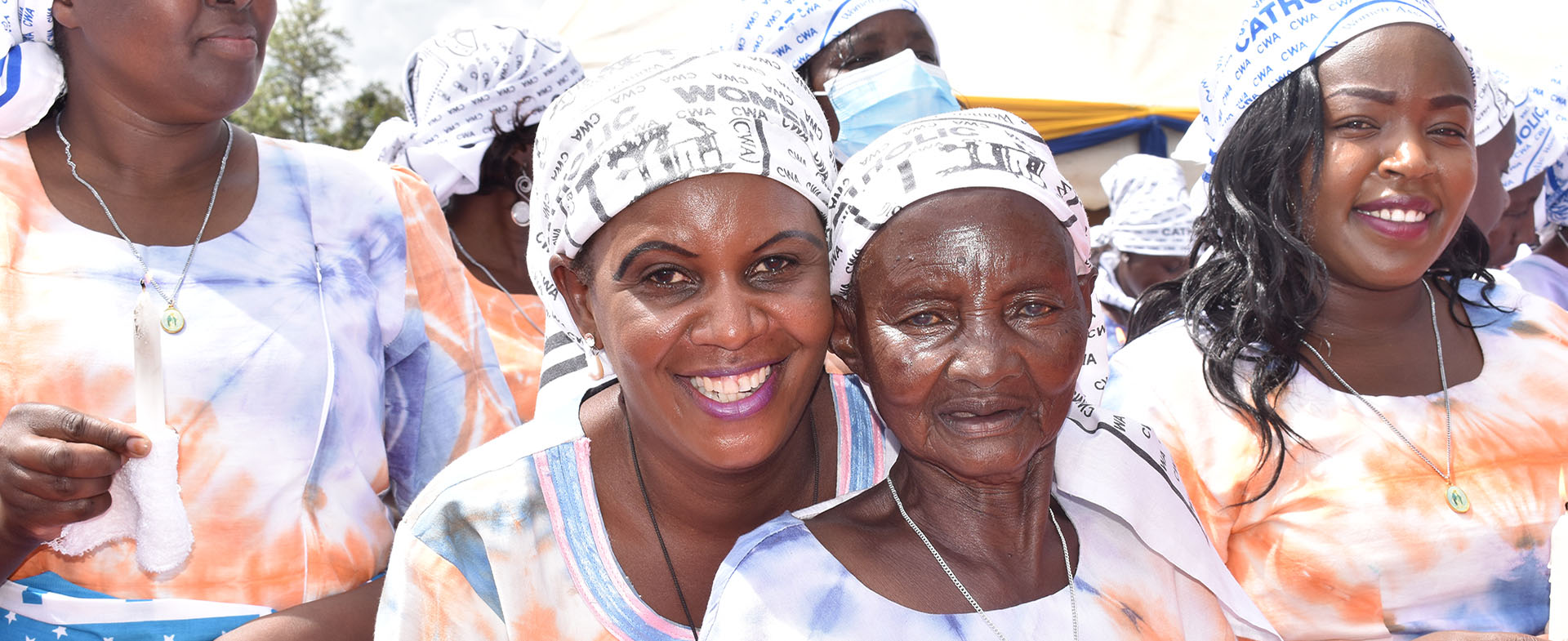
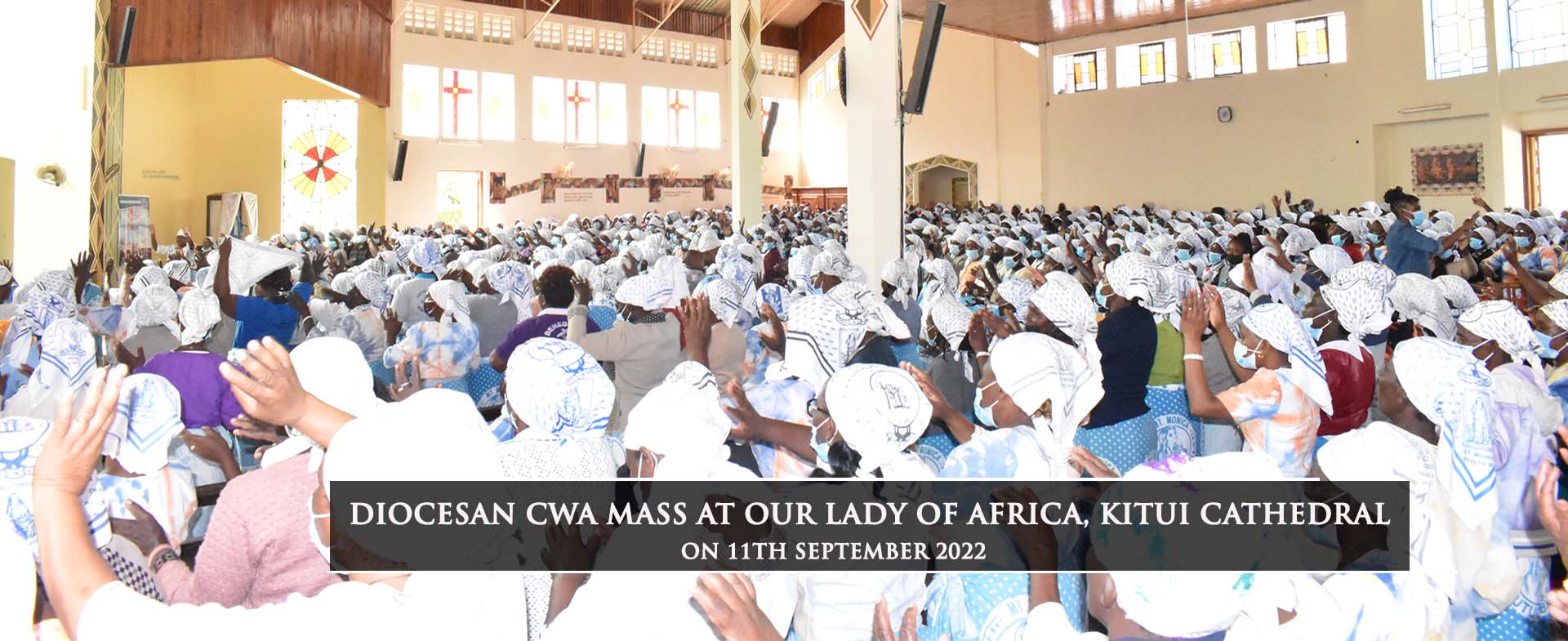
Church groups including Catholic Women Association; Catholic Men Association;
Youth (Senior and Junior Youth) Young Christian Students (Youth in School);
Catholic Teachers Association (CTA); Association Of Sisterhood in Kenya (AOSK),
Kenya Diocesan Priests Association –KEDPA for the clergy.
There are also several devotional groups
including: St. Monica (Within CWA), St. Alloys Altars Boys, Shirika la Bikira
Maria (Within the youth), Pioneer; Alcoholic Anonymous Family Life and Marriage
encounter, etc
The church in Kitui is
firmly built on the Small Christian Communities that are spread all over the
diocese. This has increased participation of the lay, not only in liturgical
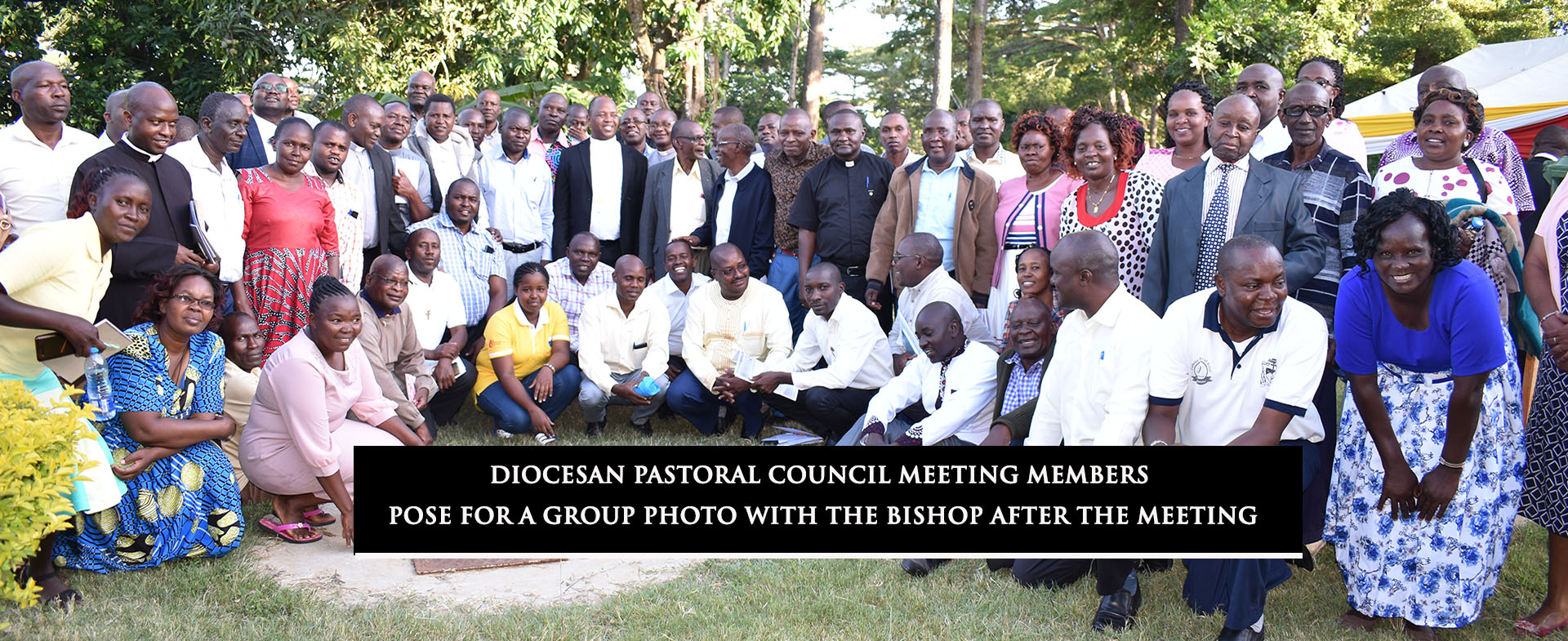
celebrations, but also in the Church Administration via station Council; Parish
councils and the Diocesan Pastoral Council
MINISTRIES
The diocese has several
programmes developed that target pastoral ministry, people’s health, education,
social and developmental interventions.
These programmes include:
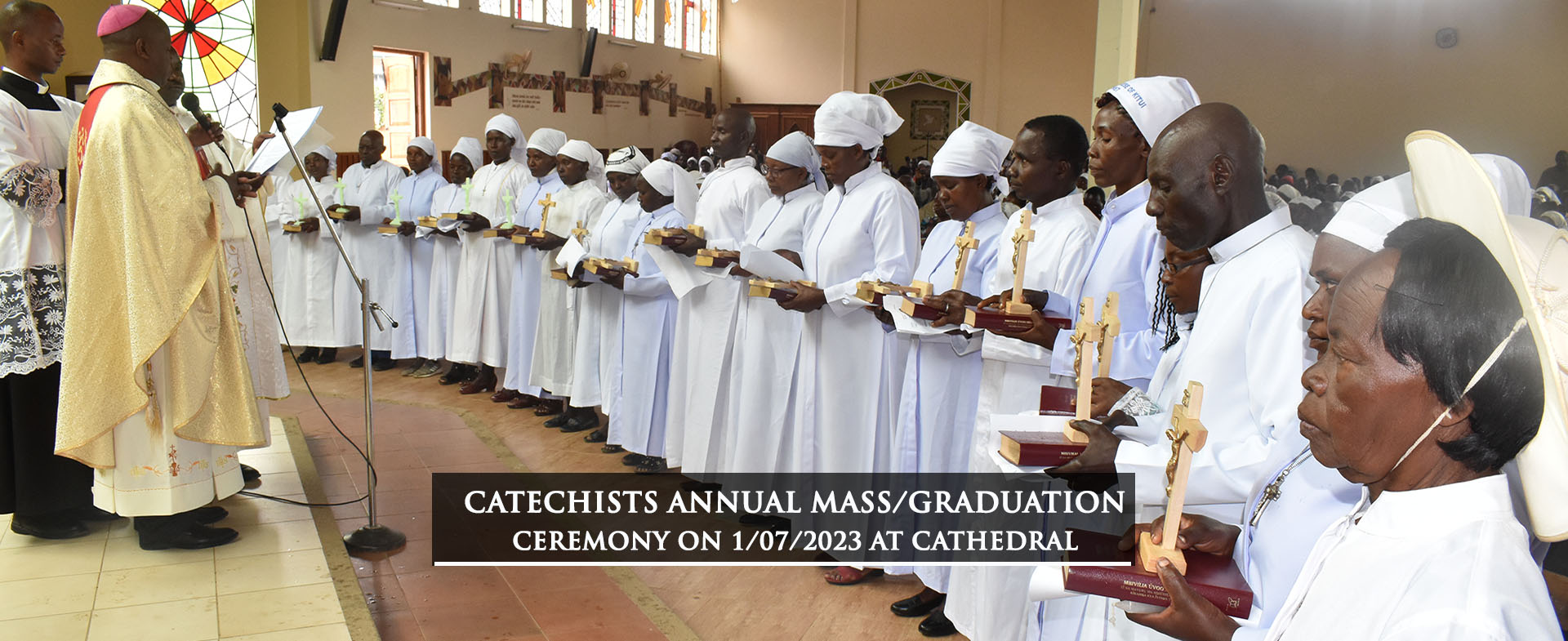
Small Christian Communities; Catechetical Programme, Communications/ Printing,
Family life/ Marriage encounter, Sunday Service and Eucharistic Ministry, empowerment
programmes (within Pastoral Ministry);
Youth (in and out of School, Junior and Senior) , Pontifical Mission Society
and vocational programmes (Within
Vocations); Education, School’s sponsorship and bursary programmes,
colleges, CRE advisory (Within education)
Diocesan Financial Administration (within
Finance Office).
Others are HIV and AIDS
programme (Home Care), Administration of mission hospitals and diocesan health
facilities (within healthministry); Livelihoods and food security,
Women programme, Emergency Operations/ Relief Programmes, water Programme, Justice
and Peace Programme, etc (within
Development ministry); Partnerships and policies formulation (within Bishop’s office).
PROJECTS
Several projects have been
initiated in the diocese, for demonstrative purposes in order to empower people
on self sustainability and at the same time, help support some Diocesan
Pastoral activities. These include (in
development) The GASP Project; Honey Project; Mango Processing Project (In
Pipeline); (In Pastoral Office) The
Bookshop/ Printing; the Pastoral Conference and retreat Centre; (In Education) The private primary
schools (St. Michael and St. Gabriel), (In
Finance): St Joseph’s Minor Seminary, Polytechnics, Workshop, etc; (In health): Two mission Hospitals and
several Dispensary units in several Parishes in the Diocese.
PARTNERING
In addition, the Diocese is
establishing partnerships, especially with Partner-organizations such as CAFOD,
CRS, Trocaire, GOAL, World Council of Churches, WFP, CARITAS, Friends of Kitui
(Dublin, Ireland), among others, who
have been very supportive in partnering with the diocese to empower people of
Kitui.
Also included in these
partnerships are overseas dioceses and Parishes, as a vehicle to share common
experiences of evangelization. The most notable ones include the Global
Solidarity Partnership between the Catholic Diocese of Kitui and the Catholic
Archdiocese of St. Paul and Minneapolis, the parish partnerships between Bray,
Clogher and Dalkey (Dublin, Ireland) with Endau and Zombe Parishes etc.
In addition is enormous
support for Pastoral Ministry from several church organizationsincluding the Pontifical Missionary Society;
Missio; Propagation of Faith, MIVA Miserior, AMA, among others.
The Church Parishes’ Structure:
Diocese has 24 parishes,
which are grouped into 4 deaneries: